

Let’s be honest, bathroom mould plays hide and seek. One week, your grout looks pristine; the next, black spots are taking over the shower sealant, leaving you wondering what went wrong. Even after a new bathroom installation, mould can begin to grow in as little as 24 to 48 hours.
If you’re thinking about how do you get rid of mold in the bathroom? you’re not alone. With the UK’s damp weather and those daily steam sessions, cities like London and Manchester are hot zones for mould. But, the interesting part? Most of the time, you can sort it out yourself.
In this 2026 DIY guide, we’ll cover what causes bathroom mould, how to eliminate it safely, and how to keep it from returning. Let’s dive in.
What Causes Mould in UK Bathrooms?
Dealing with bathroom mould can be frustrating. To keep bathroom mould at bay, you first need to understand what encourages its growth. Mould isn’t random; it needs specific conditions to flourish. Understanding the cause is half the battle.
Bathroom mould thrives in three conditions:
- Moisture: Steam from showers and baths creates a humid environment that mould loves to feed on.
- Poor Ventilation: An absence of extractor fans or inadequate airflow through windows traps the damp air inside, helping mould form.
- Warmth: Mould proliferates at temperatures between 20°C and 30°C, which are typical in heated bathrooms.
Also, in the UK, condensation is a major issue. When warm air hits cold tiles or windows, water droplets form, creating the perfect environment for mould spores to settle and grow.
Common problem areas include:
- Silicone sealant around baths
- Tile grout
- Ceiling corners
- Window frames
- Behind cabinets
How Do You Get Rid of Mold In The Bathroom? Proven DIY Guide 2026
Wondering how to banish mould from your bathroom once and for all? Here’s a safe, proven step-by-step plan to remove mould effectively and restore your bathroom’s freshness.
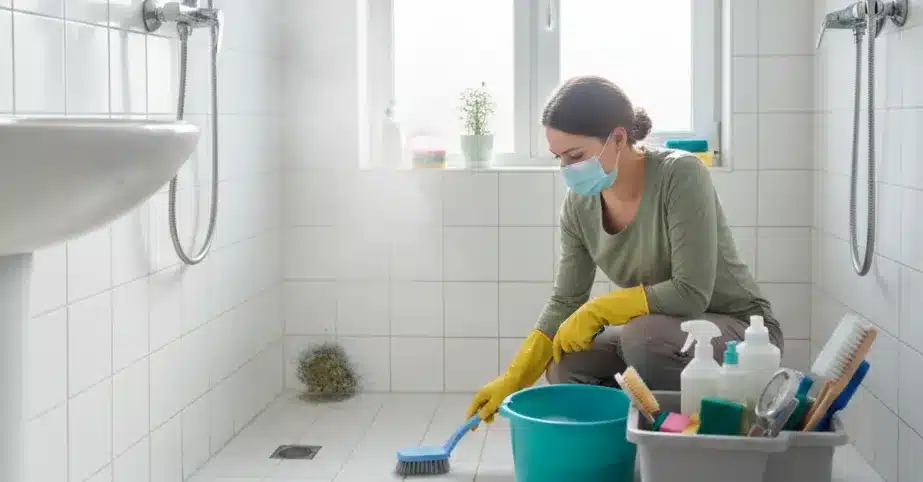
Step 1: Protect Yourself
Gear up to stay safe:
- Rubber gloves to keep mould off your skin.
- A protective mask to avoid breathing in spores.
- Old clothes that can handle a bit of mould mess.
Mould spores aren’t just gross; they can cause skin irritation and lung problems. So protecting yourself is the primary priority.
Step 2: Ventilate the Area
Before diving into cleaning, open those windows wide and fire up the extractor fans. Not only does this kick dust and fumes to the curb, but it also keeps the air fresh and healthy. Keep the airflow going while you clean, then close up when you’re done for a crisp, fresh finish.
Step 3: Choose Your Cleaning Solution
Option 1: White Vinegar (Best Natural Option)
- Spray undiluted white vinegar directly onto the mould.
- Leave for 1 hour.
- Scrub with a brush.
- Wipe clean with warm water.
Vinegar kills around 80% of mould species commonly found indoors.
Option 2: Bleach Solution (For Stubborn Black Mould)
- Mix 1 part bleach to 10 parts water.
- Apply to the affected area.
- Leave for 10–15 minutes.
- Rinse thoroughly.
Bleach removes surface stains quickly but may not penetrate porous materials like grout.
Option 3: Baking Soda Paste
Mix baking soda with water into a paste and scrub onto grout lines. This works well for mild mould buildup.
Step 4: Dry the Area Completely
Mould can come back if any moisture is left behind. To ensure the area is thoroughly dried, use:
- Towels to soak up water from surfaces.
- A fan to blow air and aid in faster drying.
- A dehumidifier to pull excess moisture out of the air.
Don’t rush this step. Ensure the area is completely dry before proceeding. Any leftover dampness can make mould grow back.
Top Signs You Have Mould in the Bathroom
Does mould always announce itself loudly? Not necessarily. Sometimes it’s sneaky. So watch for these signs:
- Dark spots like black, green, or grey on the sealant or grout
- That lingering, musty smell that you just can’t shake
- Paint or wallpaper that is peeling or bubbling
- Discoloured grout that looks more like mould than dirt
- Frequent condensation buildup on windows or walls
The faster the mould spreads, the more likely there’s hidden dampness. Fight back before it takes over. Hire professional plumbing services if required.
How to Prevent Mould in UK Bathrooms? Expert Tips
Prevention is where real success happens. When it comes to UK bathrooms, dealing with mould isn’t just about cleaning; it’s about stopping it before it starts. Here are our expert tips:
✔ Improve Ventilation: Install or upgrade an extractor fan. Leave it running for at least 20 minutes after showering.
✔ Wipe Down Surfaces: Quickly dry tiles and glass after use.
✔ Use Anti-Mould Paint: Specialist bathroom paints resist fungal growth.
✔ Keep the Door Open: Air circulation matters more than people think.
✔ Invest in a Dehumidifier: Especially useful in older UK properties with poor insulation.
✔ Heat Consistently: Keeping the bathroom slightly warm reduces condensation buildup.
For tenants who are having bathroom mould and the landlord isn’t responding, you can report an environmental problem or contact your local council.
When to Seek Professional Help for Mould Treatment?
DIY mould removal works well for small patches, typically less than 1 square meter. However, you should call in professionals if:
- Mould keeps returning despite your cleaning.
- The affected zone is large or spreading.
- You notice damage to walls, ceilings, or floors around the mould.
- There’s a persistent, strong smell even after cleaning.
- Someone with asthma, allergies, or respiratory issues lives in your home.
- You suspect hidden leaks, water damage, or structural dampness—these require expert diagnosis and repair.
Bottom Line
So, how do you get rid of mold in the bathroom permanently? Staying consistent with maintenance is key. Say goodbye to stubborn bathroom mould by thoroughly scrubbing away all traces, cutting off its moisture supply, and improving ventilation.
Most mold problems in UK homes can be addressed with straightforward DIY methods, but true prevention is what ensures it stays gone for good. Starting with deep cleaning and maintaining low humidity levels in the long run are your best strategies to stop mold from returning.
Top Questions About DIY Bathroom Mould Removal
1. How do I permanently get rid of mould in my bathroom?
Start with vinegar or bleach to wipe out the existing mould. Keep moisture in check by boosting your bathroom’s ventilation and cutting down on condensation.
2. What does toxic mould look like in a bathroom?
Toxic mould (often black mould) appears as dark, slimy patches that can spread quickly. But remember, appearance alone doesn’t guarantee toxicity.
3. What permanently kills mould?
Honestly, no solution “permanently” kills mould if moisture sticks around. Vinegar penetrates porous surfaces better than bleach, but controlling humidity is the real key.
4. Will mould go away if it dries out?
Not really. Mould turns dormant when dry but is quick to reappear once it’s wet again.
5. Is vinegar or bleach better for killing mould?
Vinegar is usually better for porous surfaces. Bleach can remove surface stains quickly, but might not reach deep roots.
6. Can I get sick from bathroom mould?
Yes, mould exposure can trigger allergies, coughs, skin irritation, and worsen asthma symptoms.
7. Is it safe to remove black mould yourself?
Small patches are generally safe with protective gear. But large infestations require professional treatment.
8. Will a dehumidifier get rid of mould?
Not directly. It helps prevent mould by lowering humidity below 60%, but it won’t remove existing mould.
9. Does wiping mould release spores?
Unfortunately, yes. Scrubbing can release spores into the air. So, wear masks and ensure proper ventilation.
10. What time of year does mould grow the most?
In the UK, autumn and winter are prime times, when condensation is high due to indoor heating and colder surfaces.
11. What plant removes 78% of airborne mould?
Peace Lily (Spathiphyllum) can improve air quality by removing airborne mould, but it’s no substitute for proper cleaning and ventilation.