

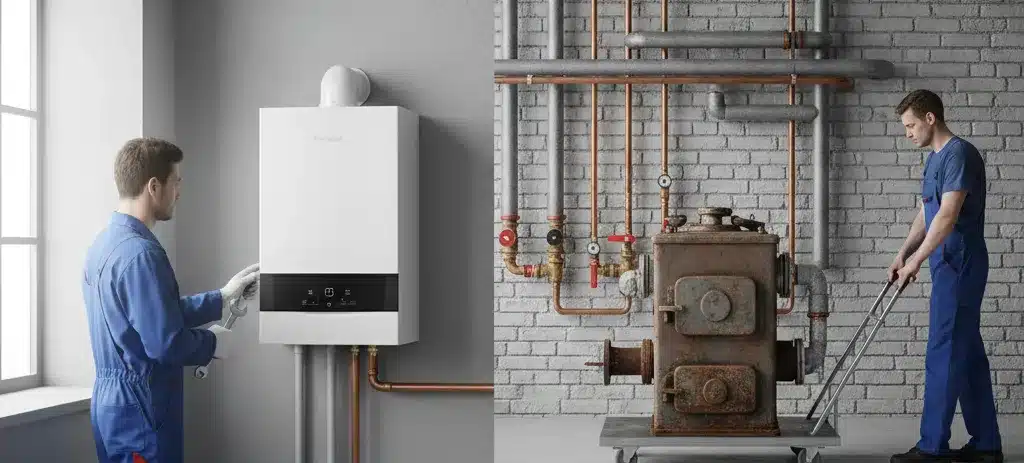
Gas boilers usually only get attention when they start making loud noises or throwing tantrums. Most UK households rely on gas boilers, and let’s be honest—they’re built to last. But nothing is forever, and even the toughest boiler has an expiry date.
Sometimes, it might give you a warning sign that it’s nearing its last leg. Miss those signs, and you could be left in the cold on a chilly midnight, wishing you had acted sooner.
So, how long does a gas boiler last? Knowing this helps you plan ahead so you won’t be caught off guard. Today, we’ll look at how long boilers usually last, what can affect their lifespan, and when it’s time to start shopping for a new one. Let’s jump in.
How Long Does a Gas Boiler Last?
A gas boiler’s lifespan varies based on its make, model, and how well it’s taken care of. Some boilers even surpass their expected life span when properly maintained.
Typically, a gas boiler lasts around 10 to 15 years. However, with proper upkeep and yearly servicing, top-tier models can last 20 years or more without trouble.
Staying on top of maintenance not only prolongs the boiler’s lifespan but also keeps it running smoothly and safely over the long term.
Gas Boiler Life Expectancy by Boiler Type
In the UK, most popular boilers are suitable for gas fuel, but their lifespan varies depending on the type. So, don’t assume all gas boilers will last the same. It’s closely tied to the type of boiler you choose.
Here’s a quick rundown of the typical lifespans for different types of gas boilers:
| Gas Boiler Type | Approximate Life Expectancy |
| Combi Boiler | 10-15 years |
| System Boiler | 15-20 years |
| Conventional/Regular Boiler | 20+ years |
| Condensing Boiler | 15-20 years |
| Cast Iron Boiler | 20-30+ years |
Key Factors Affecting Gas Boiler Longevity
Your boiler’s lifespan isn’t just about age; a lot depends on how you treat it. Here are the main factors:
❏ Proper Installation
An incorrectly sized or poorly fitted boiler will suffer from frequent cycling, leading to quicker breakdowns.
❏ Regular Maintenance
Keeping up with annual servicing prevents problems and keeps your boiler running smoothly longer. Skipping it can void warranties and cause early failure.
❏ Water Quality
Hard water with minerals causes limescale inside the boiler and pipes, which can lead to costly damage over time.
❏ Usage Levels
The more your boiler runs to meet high demand, the faster it wears out. Frequent cycling stresses the system.
❏ Type and Brand
Cast iron and condensing boilers tend to last longer than combi models. Also, choosing a reputable brand means better durability.
❏ System Care
Simple tasks like bleeding radiators, power flushing, and adding corrosion inhibitors can extend your boiler’s life. Sadly, many homeowners skip these steps, which can cut their longevity short.
When to Replace a Boiler: 8 Clear Signs You Shouldn’t Overlook
Gas boilers usually give warning signs before they completely give out. Here are 8 telltale signs that your boiler might be on its last legs, and it’s time to consider a replacement:
1. Frequent Breakdowns or Repairs
If your boiler keeps breaking down or needs repairs more often than you’d like, it’s a red flag. When a single repair costs more than half the price of a new boiler, or annual servicing exceeds £500, it’s time to upgrade.
2. Sudden Spike in Energy Bills
Have you noticed your energy bills suddenly skyrocket? That’s often a sign your boiler is losing efficiency. Inefficient boilers work harder, wasting fuel and money.
3. Loud Unusual Noises
Banging, gurgling, or whistling sounds from the boiler signal it’s having trouble. A healthy boiler remains quiet. Loud noises mean parts are worn or malfunctioning.
4. Unpleasant Smells
Detecting a gas or sulfurous rotten egg smell? Turn off the boiler and call in professional gas engineers immediately. These odours could indicate leaks or dangerous issues, and your boiler might need replacing.
5. Yellow or Orange Flame
Your boiler’s flame should be blue. A yellow or orange flame can indicate a sign of carbon monoxide leaks—urgent replacement is needed for safety.
6. Inconsistent Heating or Hot Water
If some rooms are warm while others are cold, or hot water isn’t reliable, your boiler isn’t doing its job. These fluctuations point to underlying issues that may require boiler replacement.
7. Leaks or Damp Patches
Puddles or damp patches around your boiler? They could signal internal damage like pipe corrosion or a cracked heat exchanger. Always get a professional opinion. Sometimes a replacement is the best solution.
8. Parts Unavailability
If your boiler’s parts are discontinued, especially after 10-15 years, repairs become impossible or costly. When replacement parts are scarce, it’s a clear sign to consider a new boiler.
How to Extend a Boiler’s Lifespan?
Want your gas boiler to last longer and run smoothly? Check out these simple tips:
- Have it serviced annually by a certified gas engineer.
- Keep the pressure steady between 1 and 1.5 bar and check it regularly.
- Bleed your radiators and keep the boiler clean to run efficiently.
- Insulate your pipes to prevent freezing during cold months.
- Install a magnetic filter and add a corrosion inhibitor for extra protection.
- Power flush your system every few years to clear out buildup.
- Turn on the heating for short periods in summer to keep parts moving.
- Avoid overheating to prevent damage.
Bottom Line
Choosing a gas boiler means opting for an affordable, handy heating solution. Instead of obsessing about its lifespan, focus on understanding how long it’s meant to last and keeping it in top shape. Routine inspections and monitoring can help you extend its life.
The more diligent you are with maintenance, the longer your boiler will work efficiently. While ageing is inevitable, proper care can push back the expiration date and guide you on the best time to replace it.
Frequently Asked Questions (FAQs) About Gas Boilers’ Lifespan and When to Replace It
How do you Know When your Boiler Needs Replacing?
If your boiler is 10-15 years old or more, it’s showing signs of wear like frequent repairs, loud noises, or foul smells, it’s time to consider a replacement. Don’t wait until it breaks down completely. Early action can save you money and prevent emergencies.
Can I Still Replace My Gas Boiler After 2026?
Absolutely. You can replace your gas boiler after 2025. The 2026 ban applies only to new builds, not existing homes, so upgrading your boiler remains an option.
What Is The Life Expectancy Of a Gas Boiler?
Most gas boilers last around 10-15 years. However, high-quality models like cast iron or condensing boilers can often reach 20-30 years with proper maintenance.
What Is The Average Cost to Replace a Gas Boiler?
In the UK, replacing a gas boiler typically costs between £3,000 and £4,500. The final price depends on several factors.
Should a 20-Year-Old Boiler Be Replaced?
Yes, it’s highly advisable. A 20-year-old boiler’s parts become harder to find, and the risk of breakdown or dangerous leaks like carbon monoxide increases. Upgrading ensures safety and efficiency.
At What Age Is a Boiler Considered Old?
Generally, a boiler aged 10-15 years or older is considered old. When it hits around 20 years, it’s definitely time to consider replacement for safety and efficiency reasons.
Should I Turn My Boiler Off If It’s Kettling?
Yes. Kettling indicates a serious issue. Turn off the boiler immediately and contact a qualified gas engineer to diagnose and fix the problem.
What Is The Most Expensive Part Of a Boiler?
The most costly component is theheat exchanger. Its repairs or replacements can be expensive.. The final price depends on several factors.